Quick Serve Restaurant POS in 2026: How to Choose the Best POS for Speed, Scale & Profits?

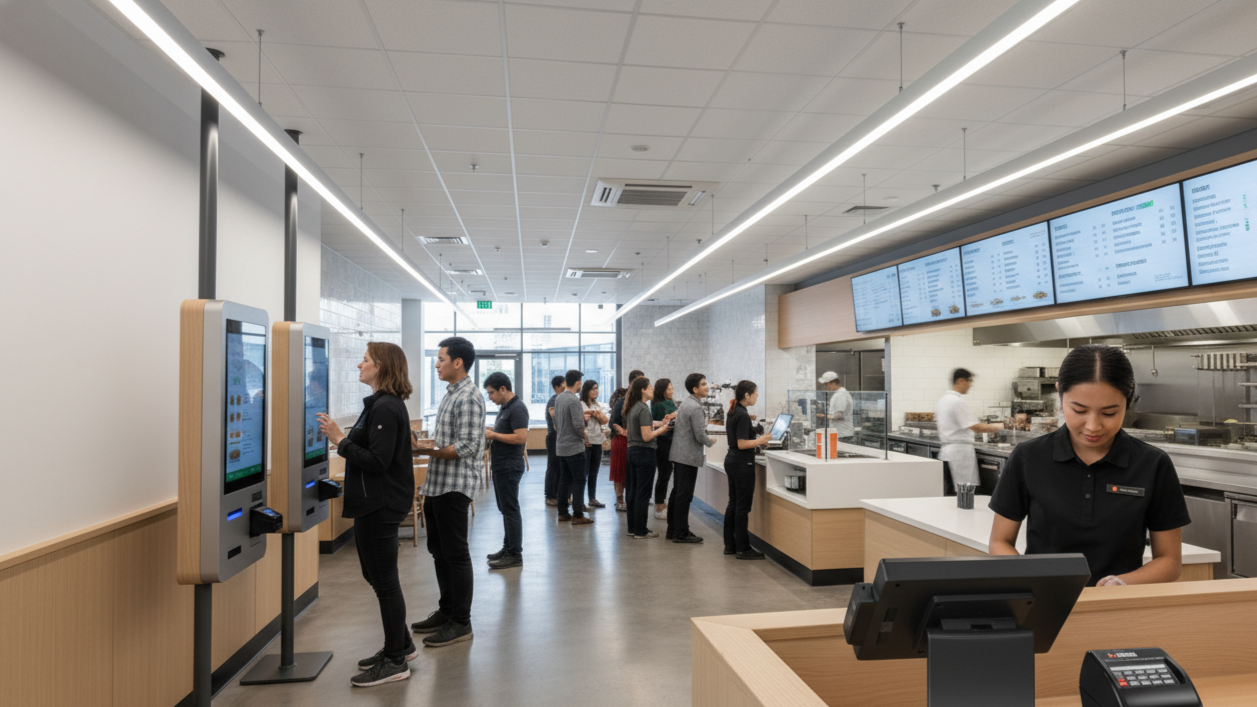
Picture a lunch rush where orders pile up, queues grow longer by the minute, and one delay snowballs into lost customers and thinner margins. In 2026, that’s not just a bad day, it’s a competitive risk. A modern quick serve restaurant POS now determines how fast you serve, how well you scale, and how profitably you operate. This guide breaks down how the right QSR POS helps QSRs meet rising demands for speed, omnichannel convenience, real-time data, and sustainable growth.
What Is a Quick Serve Restaurant POS?
A Quick Serve POS streamlines restaurant operations, minimizes employee workload and boosts sales. It synchronizes all channels, including front counter, kiosk, payroll, inventory, and loyalty programs.
QSR POS differs from traditional POS systems by managing high-volume order flow, offering simple menus, facilitating fast checkout at drive-thrus, and utilizing kiosks and QR codes.
Why QSRs Need a Specialized POS in 2026?
QSR POS is fast-paced with high transaction volume that can’t be coped with by traditional POS. It offers:
- Speed and accuracy expectations
Operations at QSR POS are synonymous with speedy customer service and deliveries.
- Omnichannel growth: dine-in, takeout, drive-thru, delivery
A seasoned QSR POS takes orders for dine-in, takeout, drive-thru and delivery.
- Labor shortages and rising costs
It addresses labor shortage by automating tasks like order taking and payment processing, reducing dependency on labor and cutting down costs.
- Need for real-time visibility across stores
QSR POS functions across stores to see how operations are managed across franchises.
- Scalability for growing brands
A QSR POS acts as the central nervous system for operations, ensuring efficiency, consistency and data-driven decision-making across its locations.
Key Features of the Best Quick Serve Restaurant POS
The pivotal features of the best QSR POS include:
-
Fast Order & Payment Processing
With contactless payments, customers can scan a QR code from their table, browse the menu, customize orders and pay instantly.
2. Kitchen Display System (KDS) Integration
Real-time timers eliminate the need for paper tickets, optimizing the kitchen workflow and ensuring orders are prepared efficiently.
3. Centralized Menu & Price Management
A seasoned QSR POS is functional across multiple locations or franchises. There is a consistent menu that changes based on daypart pricing.
4. Real-Time Reporting & Dashboards
The real-time reporting is designed for quick and easy data interpretation through graphs and charts. This includes sales data, analyzing AOV, labor percentage and different items’ performance.
5. Built-In Loyalty & CRM
By sending exciting discounts or loyalty programs, you can target your audience, retain old customers and target new ones.
6. AI-Powered Insights & Automation
With AI-powered insights, minimize waste, food spoilage, and save ingredients from perishing. It helps avoid long wait lines, improves order accuracy, and reduces menu item shortages.
Benefits of Using the Right POS for Quick Serve Restaurants
The right QSR POS offer:
-
Faster service and shorter queues
QSR POS speeds up order processing, payments, and kitchen communication.
2. Higher order accuracy
It ensures the right items, quantities, and customizations are delivered every time.
3. Increased AOV with upsells
QSR POS boosts AOV by suggesting add-ons, upgrades, or complementary items at the point of purchase.
4. Improved guest experience
Through quick service, accurate orders, and convenient payment options, you can offer higher satisfaction, repeat visits, and stronger brand loyalty.
5. Easier scaling across locations
Since QSR POS is hosted on cloud, there is synchronous scaling across locations where all franchises can talk to each other.
How to Choose the Best Quick Serve Restaurant POS?
It’s pivotal to choose the best QSR POS to keep your business snowballing into success. Choose POS:
-
Built specifically for QSR speed and volume
The QSR POS should be dedicated for high speed environment and high-volume orders.
2. Offering true omnichannel support
It should cater to QR codes, kiosks, drive-thrus, and web/mobile apps for ordering.
3. With cloud reliability and uptime
The QSR POS should be hosted on the cloud to attend multiple locations and offer maximum uptime.
4. Catering to real-time analytics
Get instant access to live sales, inventory, staff performance, and customer data to make quick, informed decisions.
5. Scales to multi-location growth
It supports business expansion across multiple outlets by centralizing data, standardizing operations, and maintaining consistent reporting.
6. Transparent pricing and strong support
Its pricing shouldn’t have hidden costs and offer 24*7 support.
How NOVA Helps Modern Quick Serve Restaurants?
NOVA is an all-in-one restaurant management system extending its service to QSRs. It is:
- AI-native, all-in-one QSR POS for counter, QR, kiosks, and web ordering.
- Built for speed, ultra-fast order flow.
- Assembled for unified operations like POS, KDS, inventory, loyalty, and analytics.
- A seasoned tool for real-time dashboards, sales, labor, and margin visibility.
- Made for smart automation, forecasting and alerts.
- Designed for centralized control, menus and pricing across locations.
- Developed by engineers and the brainchild of restaurateurs for faster service, higher AOV and better margins.
KPIs to Track With a QSR POS
The KPIs should be measured by:
-
Order time/throughput
Measures how quickly orders are taken, processed and completed.
2. Average order value (AOV)
The average ticket size for a single order indicates upsells, combos and promotions.
3. Sales per labor hour
Tracks sales for every labour hour worked to assess staff productivity.
4. Order accuracy
Indicates how often orders are completed without mistakes impacting customer satisfaction.
5. Peak hour performance
How the QSR handles traffic during peak hours, measuring speed, accuracy and staff efficiency.
6. Repeat visit rate
How frequently customers return serves as a key measure of guest satisfaction, loyalty, and long-term business growth.
The Right POS Is Your QSR Growth Engine
In 2026, a QSR POS is no longer just about billing; it’s the engine that powers speed, scale, and profitability. NOVA helps QSRs stay ahead with AI-native automation, real-time insights, and seamless omnichannel operations. It offers fast service and higher AOV to better labor control and effortless multi-location scaling. NOVA equips growing brands to serve smarter, operate leaner, and grow with confidence.
See how NOVA’s AI-native QSR POS helps you serve faster, sell smarter, and scale with confidence. Book a free demo today.
FAQs About Quick Serve Restaurant POS
- What is the best POS for QSRs?
NOVA is the best POS for QSRs offering omnichannel support and AI-native automation.
2. How much does a QSR POS cost?
The POS software costs $0 to $200 per month and hardware costs $599 to $3000 one-time.
3. Can a POS handle drive-thru and kiosks?
Yes, NOVA is a market-leading POS that handles drive-thrus and kiosks.
4. How long does implementation take?
It can take anywhere between one day to several weeks for a full transition.