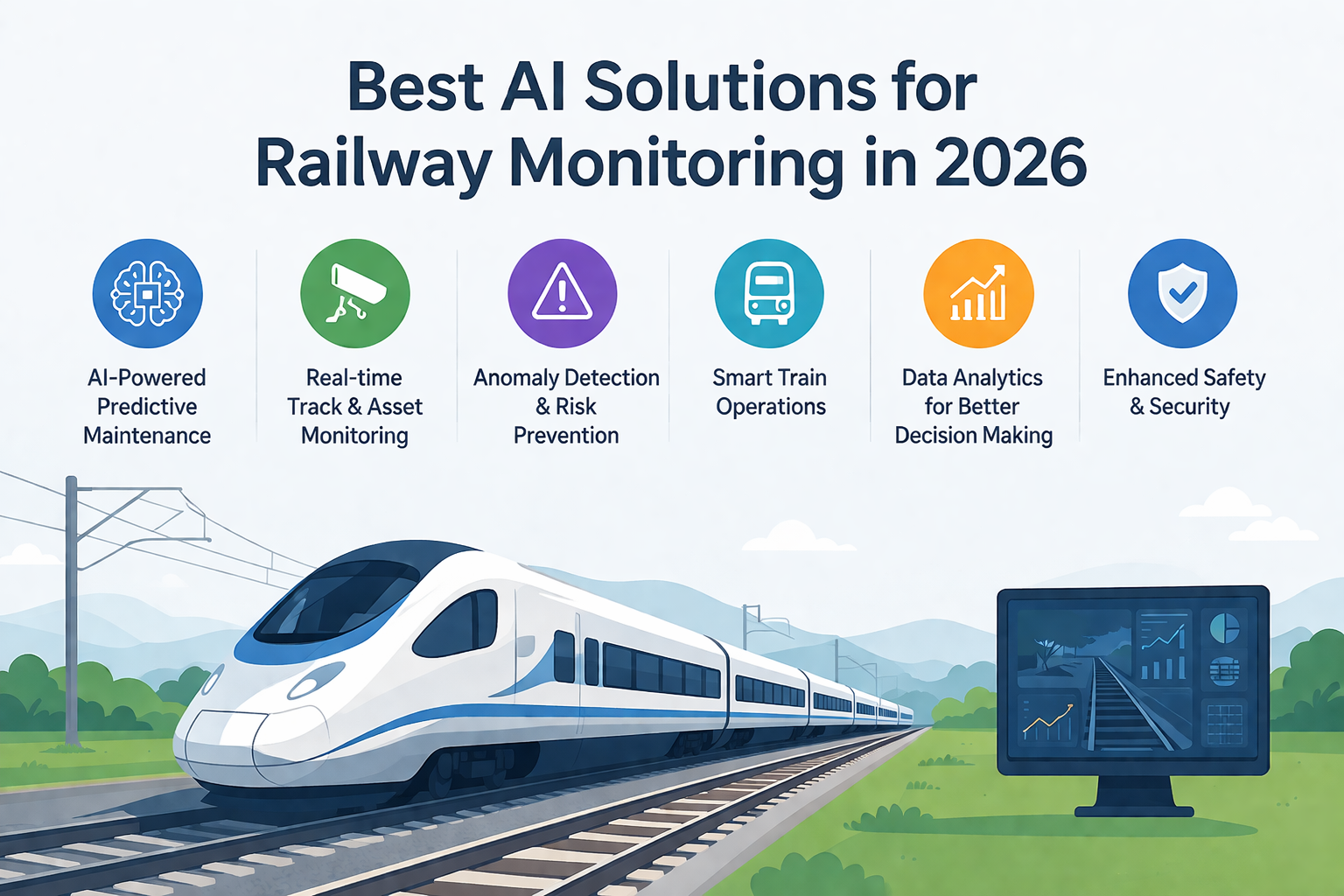
Artificial intelligence is quickly changing how railway networks are monitored, inspected, and maintained. Traditional inspection methods are increasingly being replaced or assisted by AI systems that can process large amounts of visual, sensor, and operational data in real time. These solutions help rail operators detect faults earlier, improve safety, and reduce the need for manual inspections across large, complex infrastructure networks.
From computer vision systems to predictive maintenance platforms and digital twins, AI is becoming an important part of modern railway operations. Below are some of the leading AI-driven railway monitoring solutions that will shape the industry in 2026.
How AI Is Changing Railway Monitoring
AI is transforming railway monitoring by enabling systems to process large volumes of visual and sensor data in real time. Instead of relying solely on manual inspections, operators can now use intelligent tools to detect patterns, identify potential faults earlier, and support more proactive maintenance decisions across complex rail networks.
OneBigCircle
One Big Circle is a UK-based company that develops the AIVR AI-assisted software for remote railway inspection and monitoring. Its platform processes large volumes of onboard data to help operators assess infrastructure conditions without being present alongside the tracks all the time.
Key Features and Capabilities
- AI-assisted video analysis: Automatically processes high-definition rail footage to highlight potential defects and changes in infrastructure.
- Onboard data capture systems: Collect continuous visual and sensor data during normal train operations.
- Cloud-based inspection platform: Allows for remote access, review, and annotation of rail infrastructure data.
- Historical comparison tools: Support long-term asset tracking by comparing current and past conditions.
- Collaborative review environment: Enables multiple teams to assess and validate inspection findings remotely.
- Reduced manual inspection dependency: Helps reduce reliance on frequent trackside inspections.
- High-frequency data collection: Captures repeated observations of the same infrastructure sections to improve detection accuracy and trend reliability over time.
- Scalable network coverage: Supports deployment across large rail networks by aggregating data from multiple routes and rolling stock sources into a unified system.
One Big Circle offers an AI-driven monitoring system that improves visibility across rail networks, allowing operators to identify issues earlier, enhance maintenance planning, and streamline inspection processes.
Rail Vision
Rail Vision creates AI-based vision systems aimed at improving rail safety through real-time object and hazard detection. The company uses advanced sensors and machine learning to boost operational awareness for train operators.
Key Features and Capabilities
- Obstacle detection AI: Uses machine learning and vision systems to detect objects, hazards, and obstacles on or near railway tracks in real time.
- Real-time alert systems: Provide immediate warnings to operators when potential safety risks are identified during train operation.
- Adverse condition visibility: Enhances detection performance in challenging environments such as low light, fog, or heavy weather conditions.
- Operational safety analytics: Collects and processes data to improve safety decision-making and reduce collision risks across rail networks.
- Train-mounted vision systems: Integrates directly into rolling stock to provide continuous forward-facing monitoring during operation.
- Driver assistance support: Helps operators make faster safety decisions by providing real-time visual and AI-generated risk insights.
Rail Vision is dedicated to increasing operational safety by enabling trains to spot and respond to potential track hazards in real time using AI vision technology.
Hitachi Rail
Hitachi Rail is a global rail technology company that offers rolling stock, signaling systems, and digital rail solutions, including AI-driven monitoring and predictive maintenance platforms. Their digital ecosystem focuses on improving rail performance, safety, and efficiency across entire networks.
Key Features and Capabilities
- HMAX digital asset management platform: Integrates AI, sensors, and analytics to monitor trains, signaling, and infrastructure in real time. It supports predictive maintenance strategies.
- Remote infrastructure monitoring: Uses onboard sensors and cameras to continuously collect rail condition data. This reduces reliance on manual inspections.
- AI-powered predictive maintenance: Uses machine learning to identify faults early and optimize maintenance planning for rail assets.
- Cloud-based data integration: Combines operational, signaling, and infrastructure data into unified digital platforms for control centers.
- Partnerships in AI innovation: Works with major tech companies to advance autonomous and intelligent rail systems using generative and industrial AI.
Hitachi Rail combines AI, predictive analytics, and digital asset management to create smarter, safer, and more efficient railway monitoring and maintenance across modern rail networks.
Trimble Railway
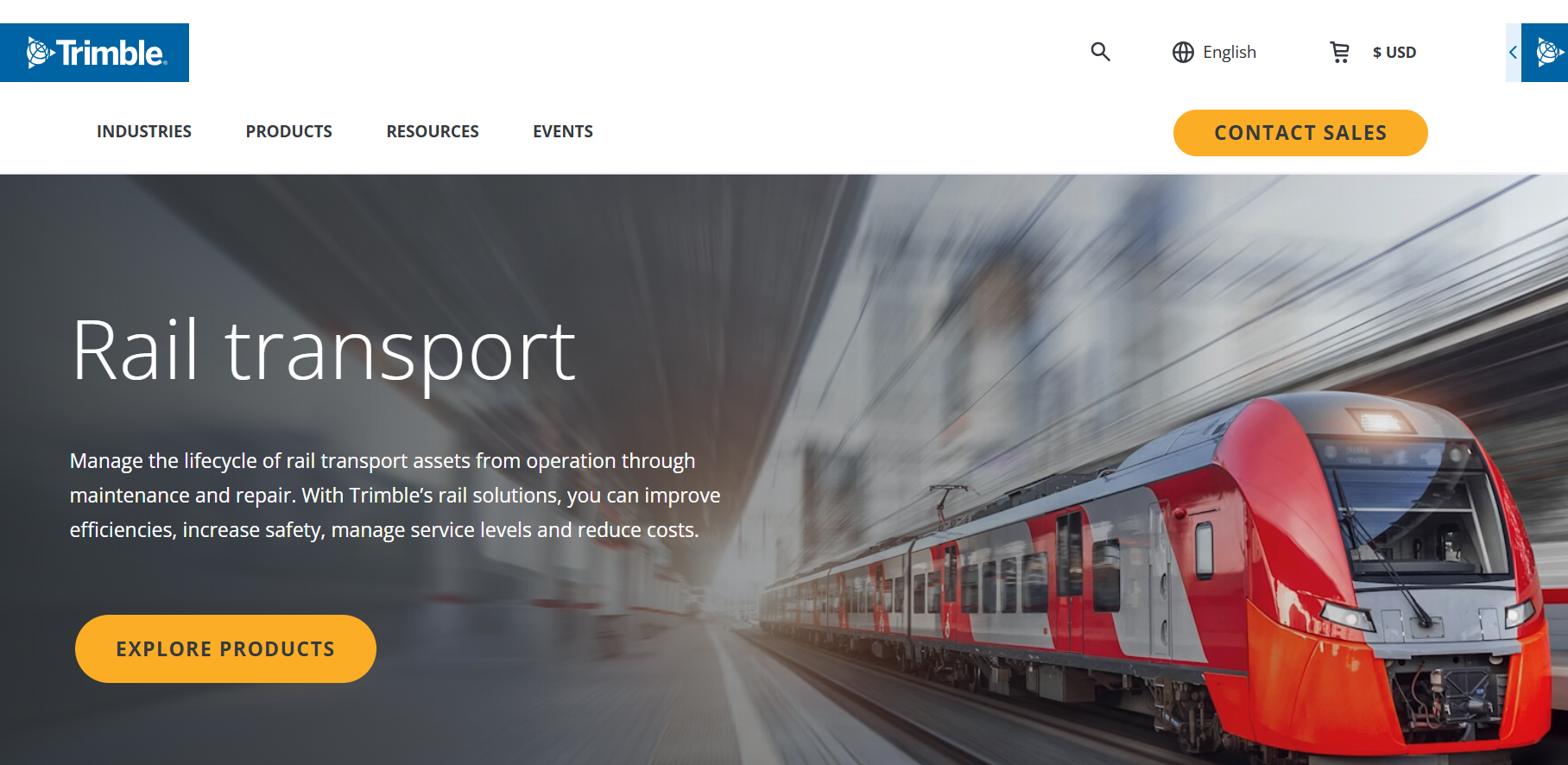
Trimble Railway provides digital rail monitoring solutions that combine AI, geospatial data, and onboard sensing systems to support infrastructure management and maintenance planning.
Key Features and Capabilities
- Automated condition monitoring: Uses onboard and wayside systems to capture continuous rail asset condition data during normal operations.
- AI-assisted infrastructure analysis: Applies intelligent processing to detect patterns and changes in track, wheel, and fleet conditions.
- Geospatial rail mapping: Integrates inspection data into detailed digital maps for improved visualization and infrastructure tracking.
- Maintenance planning integration: Connects monitoring outputs with asset management systems to support structured maintenance scheduling and decision-making.
Trimble Railway merges AI with geospatial intelligence to give operators a structured and data-rich view of rail infrastructure performance and condition.
Summing Up
AI is becoming a vital part of railway monitoring in 2026, allowing for faster fault detection, improved safety, and more effective maintenance planning. By integrating computer vision, predictive analytics, and geospatial intelligence, modern systems help operators move from reactive inspections to proactive infrastructure management.
As rail networks become more complex, AI-driven monitoring solutions are essential for ensuring reliability, efficiency, and long-term safety in operations.