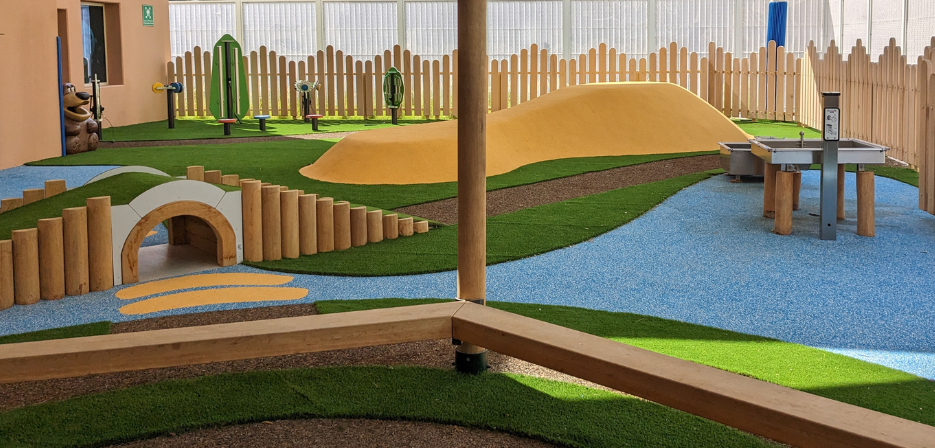
Early childhood education has undergone profound conceptual and practical evolution in recent decades, shifting from primarily custodial care to sophisticated developmental approaches based on advancing scientific understanding of early brain development. As research continues to demonstrate the critical importance of early experiences for lifelong outcomes, education systems worldwide are reconsidering traditional approaches to serving our youngest learners. This reimagining requires teachers with specialized knowledge of child development, intentional instructional approaches that honor play as learning, and systemic supports that ensure equitable access to high-quality early learning experiences.
Neuroscience research has transformed our understanding of early development, revealing the extraordinary brain growth and neural connectivity formation occurring during the first years of life. By age three, a child’s brain has formed approximately 1,000 trillion synapses—nearly twice the number in adult brains. This biological reality highlights why early experiences profoundly influence cognitive, social, emotional, and physical development. Quality early childhood education provides the stimulating interactions, language exposure, emotional security, and sensory experiences that support optimal neural architecture development during this critical period of heightened brain plasticity.
Play-based learning represents the primary developmental approach aligned with how young children naturally construct understanding. Through play, children develop executive function skills by planning activities and following self-created rules. They build language through rich imaginative scenarios. They develop mathematical thinking through pattern recognition, classification, and spatial exploration. They practice social negotiation by coordinating with peers in collaborative pretend play. Effective early childhood programs leverage this natural learning mechanism through environments designed for different play types and adult facilitation that extends learning without disrupting child-directed exploration.
Reimagining Early Childhood Education
Language development occurs explosively during early childhood, with vocabulary growing from approximately 50 words at 18 months to over 10,000 words by age six in typical development. This linguistic growth depends on abundant exposure to rich vocabulary, back-and-forth conversations with responsive adults, shared reading experiences, and opportunities to use language for varied purposes. Quality early childhood programs create language-rich environments through intentional conversational interactions, diverse literacy materials, storytelling opportunities, and explicit vocabulary development within meaningful contexts rather than isolated drill.
Mathematical thinking begins long before formal schooling through children’s natural exploration of quantity, pattern, shape, and spatial relationships. Young children demonstrate surprising mathematical capabilities when concepts are presented in concrete, meaningful contexts connected to their lived experiences. Effective early mathematics education builds on these intuitive understandings through intentional environmental design (block areas, pattern materials, measurement tools), mathematical language integration in daily routines, and playful activities that highlight mathematical concepts without premature formalization that can diminish conceptual understanding.
Scientific thinking develops through children’s natural curiosity about how the world works. Young children constantly generate theories based on observations, test ideas through experimentation, and revise their thinking based on new evidence—mirroring authentic scientific processes. Quality early science education provides rich opportunities for exploration with natural materials, introduces appropriate scientific vocabulary within meaningful investigations, models wondering and questioning rather than immediate answers, and helps children document their observations and developing theories through various representation methods.
21st Century Learning
Digital technology integration in early childhood settings requires particularly thoughtful consideration of developmental appropriateness. Research indicates that young children learn optimally through multi-sensory, physically active, socially interactive experiences that screen-based activities often cannot provide. Appropriate technology use in early childhood emphasizes interactive rather than passive consumption, social rather than isolated engagement, creation rather than mere entertainment, and time-limited exposure that complements rather than displaces essential concrete experiences with real objects and human interactions.
Family engagement takes distinctive forms in early childhood education due to the primary attachment relationships between young children and their families. Effective approaches recognize families as children’s first and most important teachers, create bidirectional communication systems that share information about development across settings, incorporate family knowledge and cultural practices into classroom experiences, and provide supportive resources without judgment. These partnerships acknowledge the emotional significance of early education transitions for both children and families navigating separation and institutional relationships for the first time.
Assessment in early childhood education emphasizes observation of children’s natural behaviors rather than formal testing situations that young children often cannot meaningfully navigate. Effective assessment approaches include systematic documentation of children’s work, narrative observations recording developmental milestones, portfolios demonstrating growth over time, and screening tools identifying potential developmental concerns requiring intervention. These authentic assessment methods provide valuable information for individualizing instruction and communicating with families while respecting developmental limitations in young children’s ability to demonstrate knowledge on demand.
Workforce development remains a critical challenge in early childhood education, with persistent disconnects between the sophisticated knowledge required for quality practice and the minimal preparation, low compensation, and limited professional status characteristic of many early childhood positions. Reimagining early education requires addressing these structural issues through preparation pathways that combine developmental theory with practical application, compensation systems that recognize the specialized expertise involved in early education, and professional standards that elevate the field while maintaining diverse entry points that ensure workforce representation from the communities being served.
The transition to elementary education often creates discontinuity between developmentally appropriate early childhood approaches and more structured primary school expectations. Effective systems create alignment through coordinated curriculum emphasizing developmental progression rather than sharp pedagogical shifts, transition activities preparing children and families for new environments, information sharing between sending and receiving teachers, and gradual introduction of new expectations while maintaining elements of familiar learning approaches. These bridging strategies recognize that development proceeds continuously while institutional structures often create artificial boundaries between educational phases.
Conclusion
Investment in early childhood education consistently demonstrates remarkable return on investment through longitudinal studies showing improved educational outcomes, higher employment rates, reduced criminal justice involvement, and lower social service utilization among program participants compared to control groups. These economic analyses provide compelling evidence that quality early education represents not merely an educational intervention but a powerful social policy tool with multigenerational benefits. Reimagining early childhood education thus requires shifting from viewing it as optional preparation for “real school” to recognizing it as an essential foundation for both individual flourishing and societal prosperity.