Most people planning a polycarbonate roofing project spend a lot of time choosing their sheets. They compare thicknesses, colours, and prices, and then they get to the accessories section and realise they have no idea what a glazing bar is or whether they need one.
Polycarbonate glazing bars are the component that holds the whole roof together at the joins between sheets, and getting them wrong is one of the most common mistakes on DIY roofing projects in the UK. This guide explains exactly what they are, which type suits which project, and why skipping them is never a sensible option.
What Is a Glazing Bar?
A glazing bar is a rigid bar that runs along the join between two adjacent sheets of polycarbonate roofing. It connects the sheets, seals the gap between them, and creates a weatherproof junction that prevents water from entering the roof structure at that point.
Without a glazing bar at each sheet join, rainwater finds its way between the sheets during heavy UK downpours. Wind lifts the edges of the sheets. The roof looks unfinished and the structure underneath gets wet.
Polycarbonate glazing bars also serve a secondary purpose that most project guides do not mention. They keep the sheets in alignment as they expand and contract with temperature changes. Polycarbonate expands significantly in summer heat and contracts in cold weather. A well-fitted glazing bar accommodates that movement without allowing the sheets to shift out of position or buckle.
The Two Main Types of Glazing Bar
This is where most buyers get confused. There are two fundamentally different glazing bar systems, and they are not interchangeable.
Rafter-Supported Glazing Bars
These bars are fixed down onto timber rafters and rely on that timber frame for their structural support. The bar itself has no structural strength. It simply connects and seals the sheets above the rafter.
Two subtypes exist within rafter-supported bars:
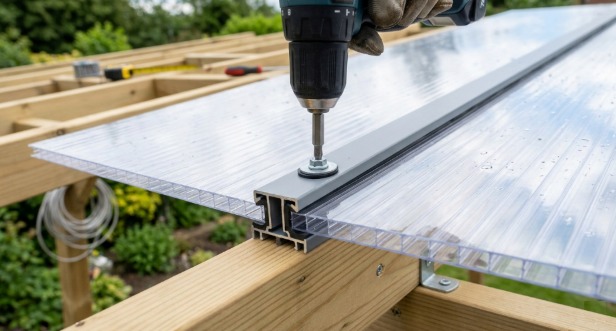
PVC capped snap-down bars have an aluminium base section that screws onto the rafter, with rubber gaskets on each side that the sheet edges rest on. A PVC cap then snaps down over the top to seal the join. These are suitable for multiwall polycarbonate sheets at 10mm, 16mm, and 25mm thickness. They are not suitable for glass or solid polycarbonate. They are available in white, brown, and anthracite grey.
Aluminium-capped screw-down bars use aluminium bases and caps rather than PVC. These are suitable for all thicknesses of polycarbonate, including solid sheets, as well as glass. They are available in 50mm and 60mm widths to suit different rafter dimensions and in white, brown, anthracite grey, and mill finish for custom powder coating.
Self-Supporting Glazing Bars
These bars do not require timber rafters beneath them. They are structural bars in their own right, capable of spanning up to 4 metres when fixed at both ends to wall plates or eaves beams.
Self-supporting bars are suitable for 16mm and 25mm polycarbonate roofing sheets and are typically used for carport roofs, canopies, and lean-to structures where a full timber rafter frame is not part of the design. They are heavier and more expensive than rafter-supported bars, but they remove the need to build a full timber subframe underneath the roof.
Which Type Do You Actually Need?
The answer depends on two things: the structure you are building and the sheet thickness you are using.
| Project Type | Sheet Type | Recommended Glazing Bar |
| Lean-to with timber rafters | 10mm to 16mm multiwall | PVC capped snap-down bar |
| Conservatory with timber rafters | 16mm to 25mm multiwall | PVC or aluminium capped rafter bar |
| Carport without timber rafters | 16mm to 25mm multiwall | Self-supporting aluminium bar |
| Canopy or walkway without rafters | 16mm to 25mm multiwall | Self-supporting aluminium bar |
| Any project using solid polycarbonate | Solid sheets any thickness | Aluminium capped bar only |
The most important rule to take from that table is this: never use PVC-capped snap-down bars with solid polycarbonate roofing sheets. Solid sheets are significantly heavier than multiwall sheets, and the PVC cap cannot hold them securely in place. Aluminium-capped bars are the only appropriate choice when solid polycarbonate is involved.
What Thickness of Sheet Do Glazing Bars Accommodate?
Glazing bars are designed for specific sheet thicknesses, and matching the bar to the sheet is mandatory. Using a bar designed for 10mm sheets with a 16mm sheet creates a gap at the join through which water immediately enters.
Thickness compatibility for PVC snap-down bars:
- Standard bar: suitable for 10mm, 16mm, and 25mm twinwall polycarbonate sheets and multiwall sheets
- Wide bar: suitable for 25mm, 32mm, and 35mm sheets
Thickness compatibility for aluminium capped bars:
- Available in versions suited to 10mm through to 35mm polycarbonate
- Also compatible with 16mm and 24mm glass units
Always confirm the sheet thickness before ordering bars. The confirmation takes ten seconds and saves a return delivery.
What Accessories Come with a Glazing Bar System?
A glazing bar is not a standalone component. A complete roof system requires several accessories alongside the bars themselves, and ordering them at the same time avoids the most common project delay of waiting for parts that were forgotten on the first order.
Essential accessories for a polycarbonate roof with glazing bars:
- Sheet end closures — these seal the open flutes at the bottom edge of multiwall polycarbonate sheets to prevent moisture, insects, and debris entering the cells of the sheet
- F-section trim — runs along the wall edge of the roof where the sheet meets the building, available in PVC and aluminium
- Wall flashing — seals the join between the F-section and the wall surface to prevent water tracking behind the sheets at the wall end
- End caps — fit over the top end of glazing bars to seal the bar profile at the ridge
- Polycarbonate sheet fixings — fixing buttons and screws used to secure the sheet to the rafter or glazing bar base before the cap is snapped down
Polycarbonate sheet fixings are often overlooked on first orders. The bar base screws down onto the rafter, but the sheet itself also needs to be secured to prevent wind uplift at the edges. Fixing buttons with the correct screw length for your sheet thickness prevents this. They also allow the sheet to expand and contract slightly at the fixing point without cracking, which matters across a full summer-to-winter temperature cycle in the UK.
PVC or Aluminium: Which Material Is Better?
Both materials work well when used in the right application. The choice depends on the project’s requirements.
PVC glazing bars:
- Lighter and less expensive than aluminium
- Suitable for twinwall polycarbonate sheets and multiwall sheets only
- Not suitable for solid polycarbonate or glass
- Best for low-to-mid span rafter-supported projects
- Available in white and brown as standard
Aluminium glazing bars:
- Stronger and more rigid than PVC
- Suitable for all sheet types, including solid polycarbonate roofing sheets and glass
- Better for exposed locations with high wind or coastal conditions
- Available in powder-coated finishes, including anthracite grey
- Required for any self-supporting roof system
For a standard lean-to or carport with a timber rafter frame and 10mm to 16mm polycarbonate roof sheets, PVC snap-down bars are a practical and cost-effective choice. For anything using solid polycarbonate, anything self-supporting, or anything in an exposed coastal location, aluminium is the correct material.
Common Glazing Bar Mistakes and How to Avoid Them
These are the errors that repeatedly occur on polycarbonate roofing projects across the UK.
Buying bars before confirming sheet thickness
The bar must match the sheet. Order the sheets first, confirm the thickness, then order bars specified for that exact thickness.
Using PVC bars with solid sheets
Already covered above, but worth repeating. PVC snap-down bars are not rated for solid polycarbonate weight. Use aluminium capped bars only when solid sheets are involved.
Forgetting end closures
Open flute ends on multiwall polycarbonate sheets allow moisture, insects, and algae into the cells of the sheet. This causes discolouration over time and shortens the lifespan of the sheet significantly. End closures are a small accessory that makes a meaningful difference to long-term performance.
Under-fixing the bar base
The aluminium base of a snap-down bar should be fixed at approximately 300mm to 400mm centres into the rafter below. Under-fixing allows the bar to flex slightly in wind, which eventually breaks the weatherproof seal at the sheet join.
Choosing the wrong colour
Polycarbonate glazing bars are available in white, brown, and anthracite grey. The colour of the bar affects how the finished roof looks significantly. Anthracite grey has become the most popular choice on modern garden structures and extensions because it sits cleanly against contemporary architecture without drawing attention to itself.
Do You Need Them?
Every polycarbonate glazing bar system adds cost and installation time to a roofing project. That fact leads some people to look for ways to join sheets without bars, usually using silicone or tape instead.
Silicone alone at a sheet joint fails within one to two UK winters. The thermal movement of polycarbonate sheets works as silicone joins open over repeated expansion and contraction cycles. Tape degrades under UV exposure. Neither alternative provides the structural alignment or weatherproofing that a proper glazing bar delivers over the ten to twenty-year lifespan of a quality polycarbonate roof.
Polycarbonate glazing bars are not an optional extra. They are the component that turns a collection of sheets into a roof that actually works.