Liontrust Asset Management Share Price: In-Depth Analysis, Trends, and Investment Outlook
Tracking the performance, metrics, and market position of a leading UK asset manager

Introduction
The Liontrust Asset Management share price has become a focal point for UK investors, analysts, and financial media alike. As one of the well-established names in the active fund management space, Liontrust Asset Management PLC (ticker: LIO.L) represents both opportunity and risk in today’s volatile market climate. Founded in 1994 and headquartered in London, the company has cultivated a strong reputation in managing unit trusts, segregated mandates, and offshore funds, particularly in the UK small- and mid-cap funds segment.
Liontrust Asset Management Share Price Overview
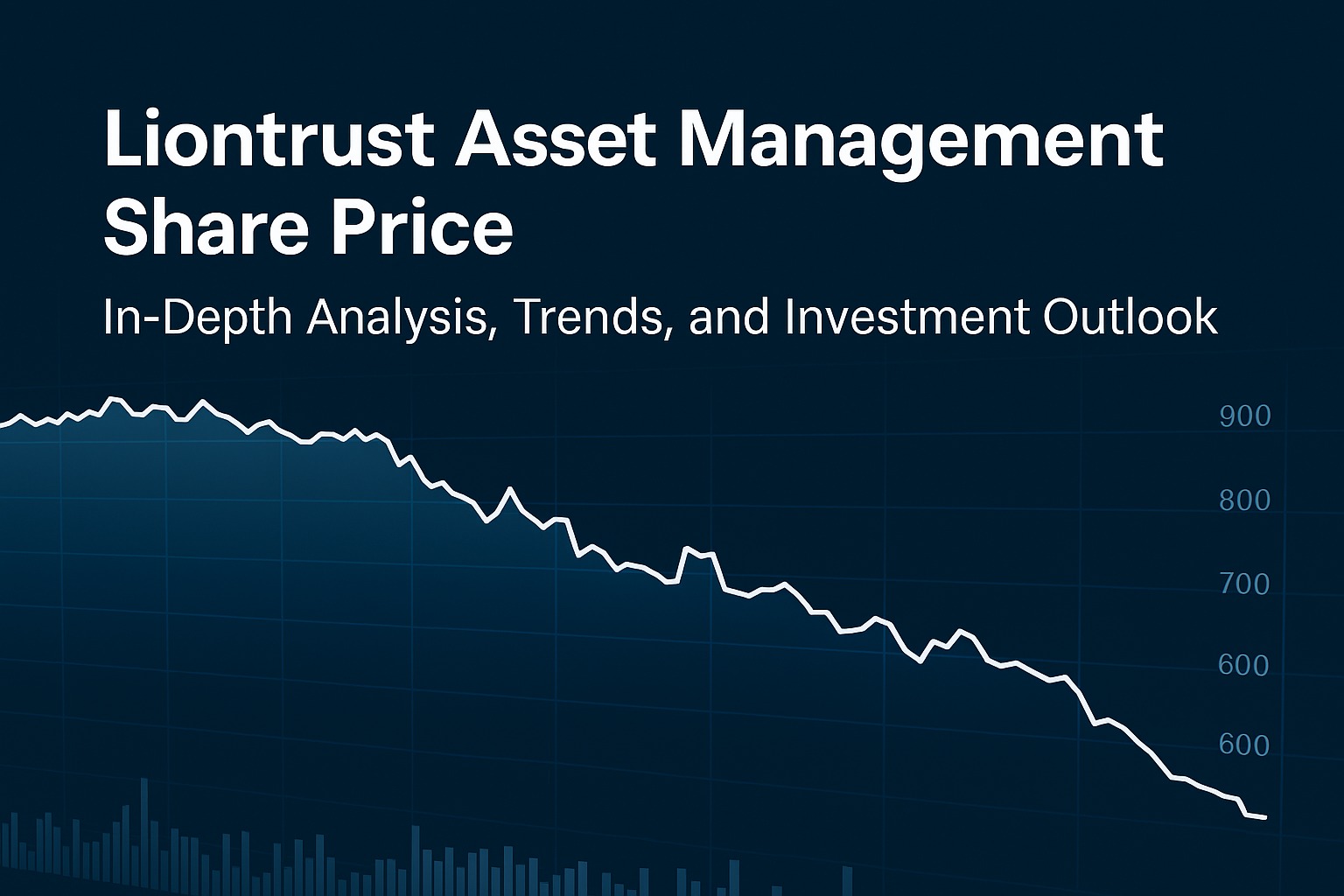
The Liontrust share price GBX has seen notable fluctuations over the last year, moving within a 52-week range marked by high volatility and investor uncertainty. With current trading around the 365.50 GBX mark, investors are closely tracking the LIO stock price for signs of recovery or further decline.
-
Market Capitalization: Approx. £229 million
-
Dividend Yield: A striking 19.7%
-
Earnings per Share (EPS): -5.46 GBX
-
Price-to-Earnings (P/E) Ratio: Not applicable due to negative earnings
Despite the company maintaining high dividend payouts, the dividend sustainability is under scrutiny due to weak earnings and mounting pressure on net profit margins.
Company Profile: Liontrust Asset Management PLC
Background & Leadership
Established in 1994, Liontrust Asset Management PLC is a prominent player in the UK’s financial services sector. The firm operates under a focused investment philosophy and delivers discretionary portfolio management to both retail and institutional clients.
Key leadership includes:
-
John Ions – CEO
-
Vinay Abrol – CFO & COO
-
Luke Savage – Chairman
-
Miriam Greenwood, Rebecca Shelley, Mandy Donald – Non-Executive Directors
Business Model
Liontrust offers a broad suite of services including:
-
Active fund management
-
Thematic investment strategies
-
Specialist portfolios across geographies and sectors
-
ESG-integrated investment principles
Their assets under management (AUM) is a vital metric, indicating the company’s financial health and market influence.
Financial Performance and Key Metrics
Understanding the Liontrust Asset Management share price requires delving into its financials:
Revenue & Turnover
The company’s revenue has experienced contraction over recent quarters due to fund outflows and shifting investor sentiment. In addition, operating profit and net income have declined, reflecting the broader challenges in the active asset management industry.
Profitability Metrics
-
EBITDA: Under pressure due to rising operational costs
-
ROCE (Return on Capital Employed): Shows declining efficiency in capital usage
-
Dividend Cover: Weak, raising red flags for future payouts
The negative EPS further illustrates the risk of maintaining a high dividend yield amidst declining profits.
Technical Analysis and Analyst Ratings
Moving Averages & Volatility
The Liontrust share price GBX has recently dipped below its 200-day moving average, a bearish technical signal. Combined with a beta coefficient indicating higher-than-average volatility, this has led to cautious analyst ratings.
Consensus Forecast & Recommendations
-
Target Price: Recently adjusted downward by Berenberg from 450 GBX to 330 GBX
-
Buy/Hold/Sell Recommendations: Mixed; a growing trend toward “Hold”
-
PEG Ratio & Fair Value Estimate: Highlight overvaluation risks given weak earnings
Recent Developments Impacting Share Price
Director Share Purchases
CFO Vinay Abrol recently bought additional shares, signaling internal confidence and a potential value buy for long-term investors.
Dividend Cuts & Buybacks
Despite generous dividends, there is speculation about future dividend cuts. The company has initiated share buybacks, potentially to support its sagging share price and adjust capital structure.
Broader Market Challenges
The firm faces headwinds from:
-
Industry consolidation
-
Growth of passive investing
-
Regulatory pressures
-
Declining investor confidence
Competitive Landscape and Comparisons
Liontrust operates in a competitive space with rivals such as:
Schroders, Abrdn, BlackRock, Artemis, Jupiter Fund Management, Premier Miton, Polar Capital, Baillie Gifford, Brooks Macdonald, B.P. Marsh & Partners, Diverse Income Trust, CVC Income & Growth, TwentyFour Select Monthly Income Fund, Pembroke VCT, Ecofin Global Utilities and Infrastructure Trust, abrdn European Logistics Income, AVI Japan Opportunity Trust, Intuitive Investments Group, VH Global Energy Infrastructure, Literacy Capital, Harmony Energy Income Trust
Compared to these peers, Liontrust’s high dividend yield is appealing, but concerns around earnings revisions and sustainability are holding back growth.
Outlook and Investment Considerations
Future Growth Prospects
Liontrust’s future depends on:
-
Stabilizing AUM
-
Enhancing fund performance
-
Regaining investor trust
-
Cost efficiency improvements
While current pricing may seem attractive, potential investors must weigh the volatility, dividend risk, and broader market conditions.
FAQs About Liontrust Asset Management Share Price
1. Is Liontrust Asset Management a good buy right now?
It depends on your risk profile. While the share price is low, earnings are negative, and dividends may not be sustainable.
2. What is the current dividend yield of Liontrust?
Approximately 19.7%, though this may be unsustainable if earnings don’t recover.
3. Why is the Liontrust share price falling?
Factors include weak earnings, negative sentiment, fund outflows, and overall pressure on active fund managers.
4. How does Liontrust compare with Schroders or BlackRock?
Liontrust has a higher dividend yield but is underperforming in terms of stability and earnings strength compared to those larger peers.
5. What should investors monitor going forward?
Watch AUM trends, analyst ratings, upcoming earnings reports, and dividend announcements.
Conclusion
The Liontrust Asset Management share price reflects a complex mix of challenges and potential. For investors seeking value with high yield, the stock offers opportunity—but with a caveat: earnings weakness, industry disruption, and market volatility cannot be ignored. A cautious yet informed approach, grounded in thorough analysis and continuous monitoring, is essential for anyone considering a stake in this UK fund manager.